

Leaving Los Angeles
And boomeranging back home

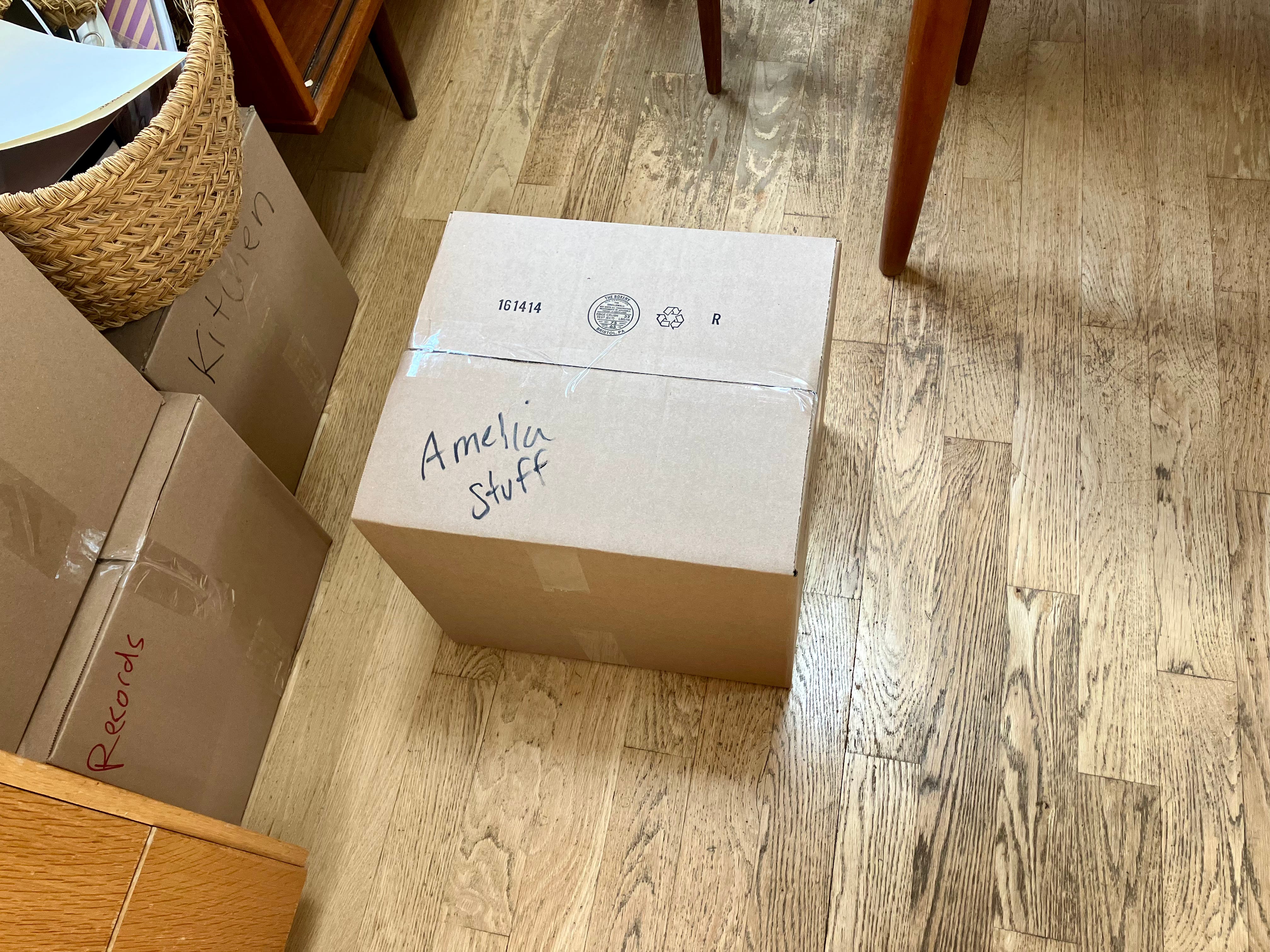
You know that writing must be a difficult practice when packing up the contents of an entire home seems preferable1. My family and I have about four days left here in this house where we’ve lived for the past fourteen years—and the stacks of boxes to prove it.
But we’re not just moving to a different place in Los Angeles. We’re moving back to where we both came from: Pittsburgh, Pennsylvania. Matt informed me that this has a name: boomerang migration, which via a quick search is defined as “the demographic phenomenon where individuals—often Millennials and Gen Z—leave their hometowns or states for education or work, only to return later.” Have you heard of this term already? Also, did Gen X not boomerang? (I am barely, just barely a Millennial.)
It stings a bit to understand that your life isn’t as bespoke as you previously thought. That there is a term for the very real, specific, stressful, expensive thing that you’re doing. Incidentally, this keeps happening to me. A few months ago while I was reading Francis Fukuyama’s excellent Liberalism and Its Discontents, I learned not just about the historical origins of liberalism and how it has fared through the centuries, but also about its many real-world implications and reverberations, i.e. how someone like me in 2026 had come to prize individual autonomy and self-actualization so well and so completely. Two concepts that don’t sound so bad, right? Individual autonomy means the right to choose one’s life. Self-actualization means that you get to attempt to better your life.
And wasn’t that what Matt and I were doing at twenty-three when we drove across the country to LA—attempting to better our lives? We were actively pursuing our dreams, trying to create lives that would be freer, cooler, and more beautiful than those of our parents in the suburbs of Pittsburgh. In retrospect, I’d say we self-actualized for almost a decade, side by side—until, oh no, we became parents, which made us prioritize other things (coziness, routine, a king-size bed, dogpiling on the bed, time in which to dogpile on the bed…), and in the process, I personally got very confused about what I was supposed to prioritize on any given day. Of course I didn’t understand it as it was happening or at least, I didn’t understand any of it within the framework of liberalism.
What I’m trying to say is that when you’re living your life, it’s almost impossible to zoom out and see it from a macro or historical perspective. You think you are doing this very particular thing; you’re chasing your very particular dreams. And of course you are. But the world and passage of time are also happening to you. And what happens ultimately when the two forces collide? When your self-actualization either hits an immovable object (your child’s will, ha) or you begin to see through your motivations, when you start to understand that achieving x goal may not result in the actual thing you want? What happens when you witness your mostly spry 77-year-old mother try to lift a suitcase after picking her up from the Palm Springs airport and she can’t quite do it like she once did and you get this vision of the undeniable future, of her becoming truly old and your children and you living too far away to be there for her in any real capacity?
I believe this is part of the reason I enjoyed Vincenzo Latronico’s novel Perfection so much.
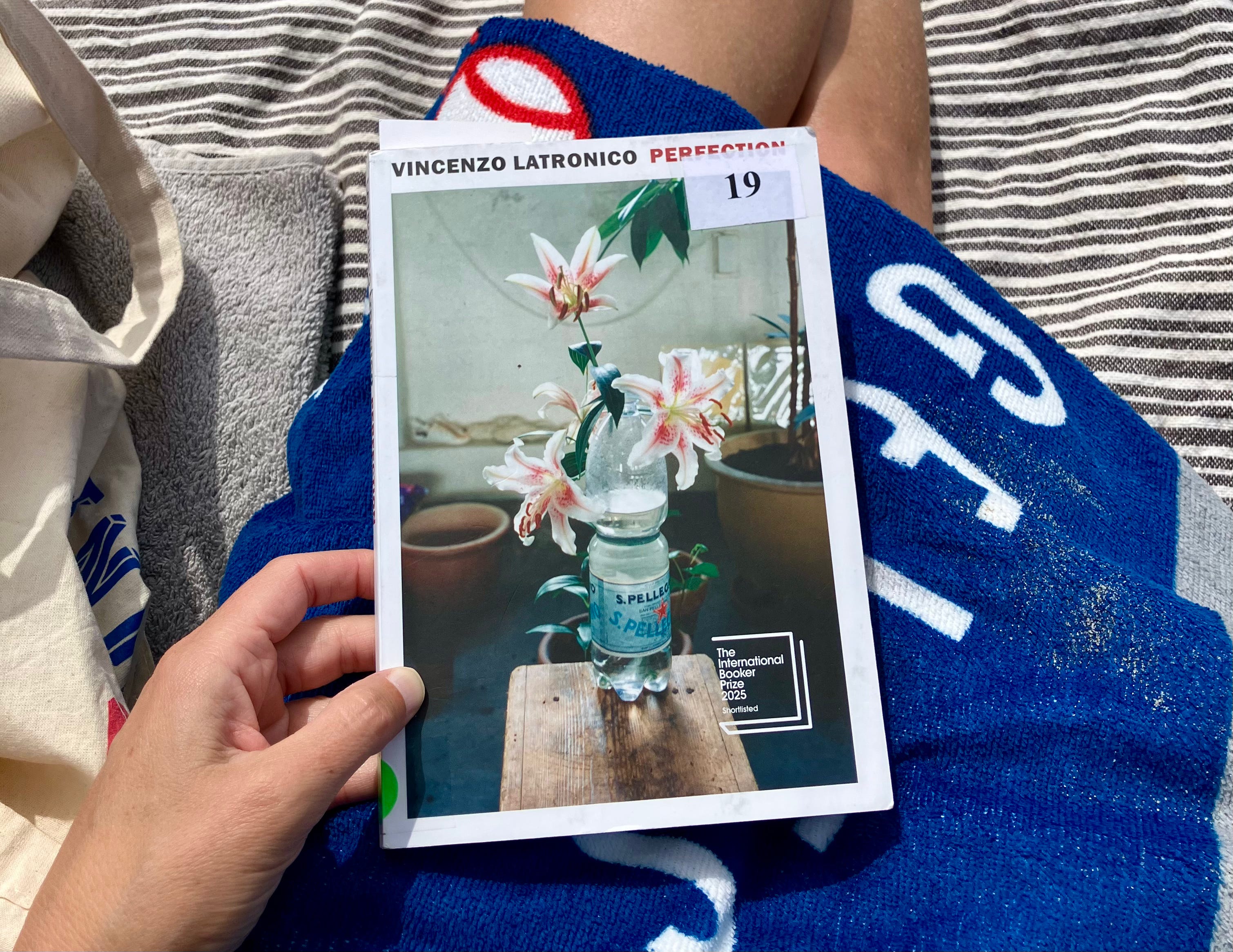
Because what Latronico does—in 124 pages no less—is encapsulate this clash of timelines: one’s personal motivations versus what happens to you. Specifically, the book chronicles how a young couple’s desire for beauty, freedom, and highly individualistic lives leads them away from home, to a much cooler place (in this case, Berlin) with cooler people and cooler objectives, only to eventually, after something like fifteen years, come to what seems like similar conclusions that I have.
What is even more heartening is that usually when I pick up a hip, autofiction-y, semi-hyped to mega-hyped book from the literary fiction genre, while I may enjoy the writing and plot, I often feel at odds with the main character’s psychology and/or their way of making sense of the world. (I’m thinking of The Anthropologists and All Fours, the former of which I’ve wanted to write about and the latter of which I do in a forthcoming essay.)
But Perfection is different. For one, the main character is a duo. Everything is from the point of view of the fused couple, Anna and Tom. This choice from Latronico feels intentionally ironic. Because so much of Anna and Tom’s lives are motivated by expressing one’s individuality and yet the book flattens the couple into one entity.
Anna and Tom had grown up with the notion that individuality manifested itself as a set of visual differences, immediately decodable and in constant need of updating.
I don’t think Anna and Tom’s exact job titles are ever stated. Partially because their jobs as, what I want to call, web designers / brand strategists evolve so organically. Their interest in hipster aesthetics combine with the time period (the early days of having your own website or blog) and soon lead to job opportunities which turn into their careers. I identified with them on this too: the emphasis on aesthetics and how the internet allowed me to digitize them, to show only what I wanted to show.
The opening chapter is a long description of Anna and Tom’s curated apartment, which they’ve taken photos of in its peak (perfected) state so as to entice renters via a short-term rental site that sounds like Airbnb though Latronico does not specify, just as he also does not specify which Southern European city Anna and Tom come from. Latronico writes:
The life promised by these images is clear and purposeful, uncomplicated.
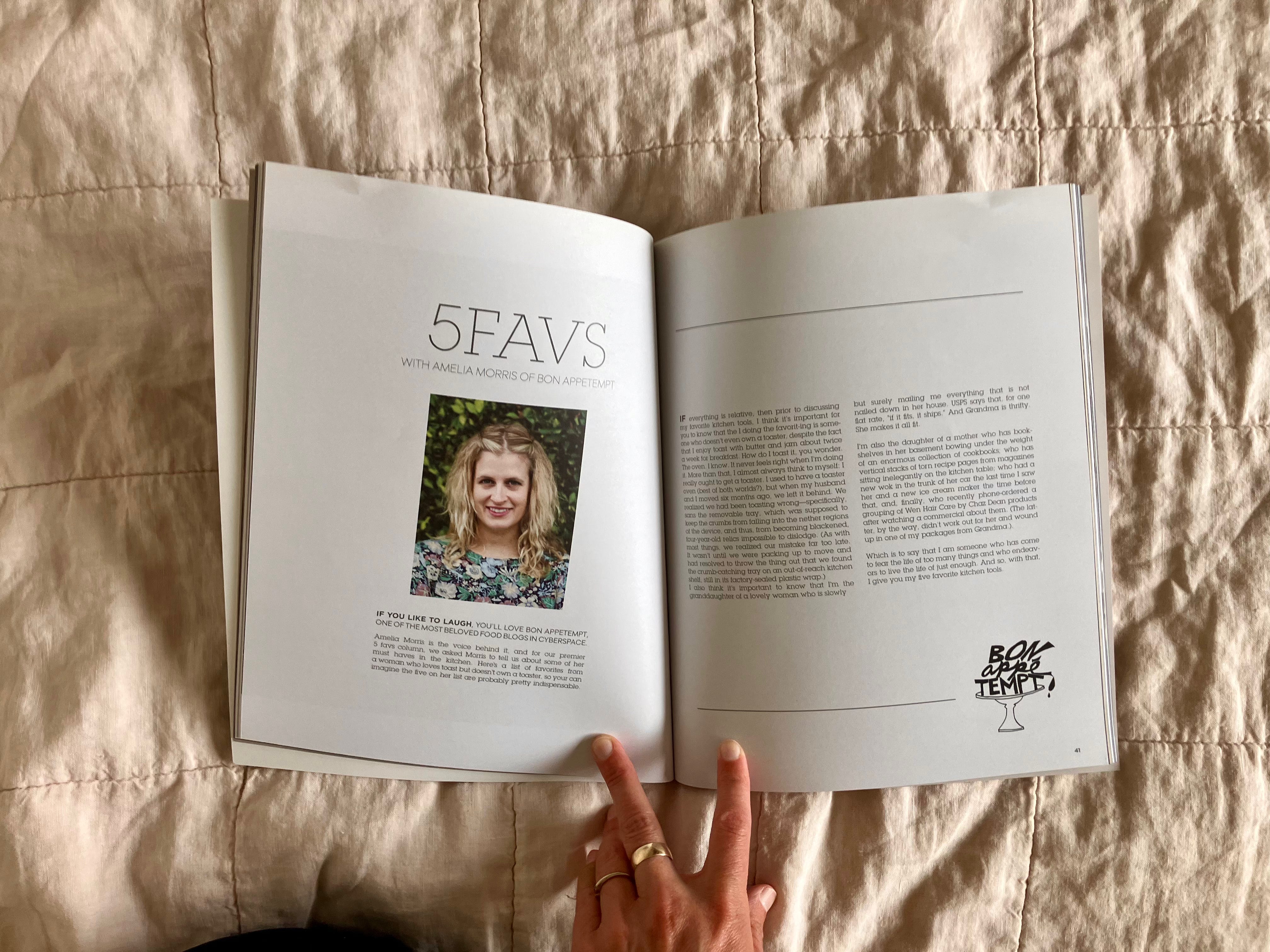
While reading, I kept thinking about my past life as a food blogger. The premise of my blog (Bon Appétempt) was to poke fun at the fake perfection found in food magazines. And sure, I did do that, but I was also spending countless hours tweaking Blogger to make my site look cool and sleek, in order to differentiate it as special. While reading about Anna and Tom, I thought about Matt and me; how I’d brought him on board to make cooking videos. I was trying so hard to turn everything I loved into a career. And for a minute there, like in the below passage, it felt like we were doing it.
The results of that love were all around them. Delicious hot meals, their bills paid, a job and a home they liked—the details that comprised their life. It was a life they had created for themselves, building difference upon difference until it encapsulated the real them, with a freedom they would never have had back at home. They were proud of it.
Building difference upon difference. Except of course, as previously noted, Anna and Tom aren’t distinct from one another nor are they distinct from their peers, who are wrapped up in the exact same aesthetics, who are also digital nomads / creatives, who follow the same people on social media, and who, even though they come from different cities and even different countries, all read the same articles from the same newspaper of record (The New York Times).
As I read Perfection, memories and feelings resurfaced from my Bon Appétempt days, one of which I hadn’t thought about in a long time; a minor detail, a blip in time but also a moment that had irked and confused me while it was happening. I was transitioning out of a friend group that I’d finally realized didn’t suit me. You will see why as I explain it to you. The moment was this: all of the people in this group were getting the exact same handbags from a very hip designer but they were monogramming these identical bags with their individualized initials. I could maybe have afforded the handbag, but I’d grown too skeptical—of the group, of the matching handbag itself. So I was naturally, without anyone having to say anything, placed on the outside looking in, like an anthropologist just there to study the behavior. Now in middle age, it all seems so dumb and obvious why it both irked and confused me. I can also see how some part of me also just wanted the effing, matching monogrammed handbag. But when you’re still on the inside of something—a group, an ideology, a life phase—even if you’re hanging by a thread, it’s almost impossible to see things clearly.
Towards the end of Perfection, Anna and Tom are in this confusing place. They know something has changed but they can’t quite specify what.
“From the outside,” Latronico writes:
it was easy enough to identify the cause of their alienation, but to them, paradoxically, no explanation revealed itself. Anna and Tom lived in a bubble, one even more insular and limited than those just starting to appear on social media. In a way, they had become radicalized. They spoke stumbling English with other non-native English speakers. They inhabited a world where everyone accepted a line of coke, where no one was a doctor or a baker or taxi driver or a middle school teacher. They spent all their time in plant-filled apartments and cafes with excellent wifi. In the long run it was inevitable they would convince themselves that nothing else existed.
To be clear, I don’t regret any of my time here in Los Angeles. Matt and I keep saying, as we pack and pack and pack, how we built a life here. We drove out here with one car and a couple of duffel bags, and now we’re leaving with two children(!), a dog, another car, and a truckload of furniture. And of course twenty-one years’ worth of memories.
That being said, moving is intense, and it’s a very destabilizing time. I’m finding myself kind of desperately scouring my books (the ones that aren’t packed already) for reassurances, and among one of them, Richard Rohr’s Falling Upward, I found this:
All that each of us can do is to live in the now that is given. We cannot rush the process; we can only carry out each stage of our lives to the best of our ability—and then we no longer need to do it anymore!
This is going to be my mantra for the next few months (or longer!) as we move into an Airbnb for a week and then drive across the country with aforementioned children and dog before ultimately landing in Pittsburgh. Wish us luck and thank you for being here! Onward…
Something I kept running into while writing this post
Amelia-Thank you for your beautiful writing! I have been reading your work since the bon appetempt days. Good luck on your big move-midlife is so wild in the most non-wild seeming ways! I grew up in the burbs of Chicago and went away to school, came back to Chicago, and then 4 kids later eventually back to the burbs-which I swore I would never do bc how uncool! Can't wait to keep reading along!