
Asking for Permission
(Getting 'No' for an answer)

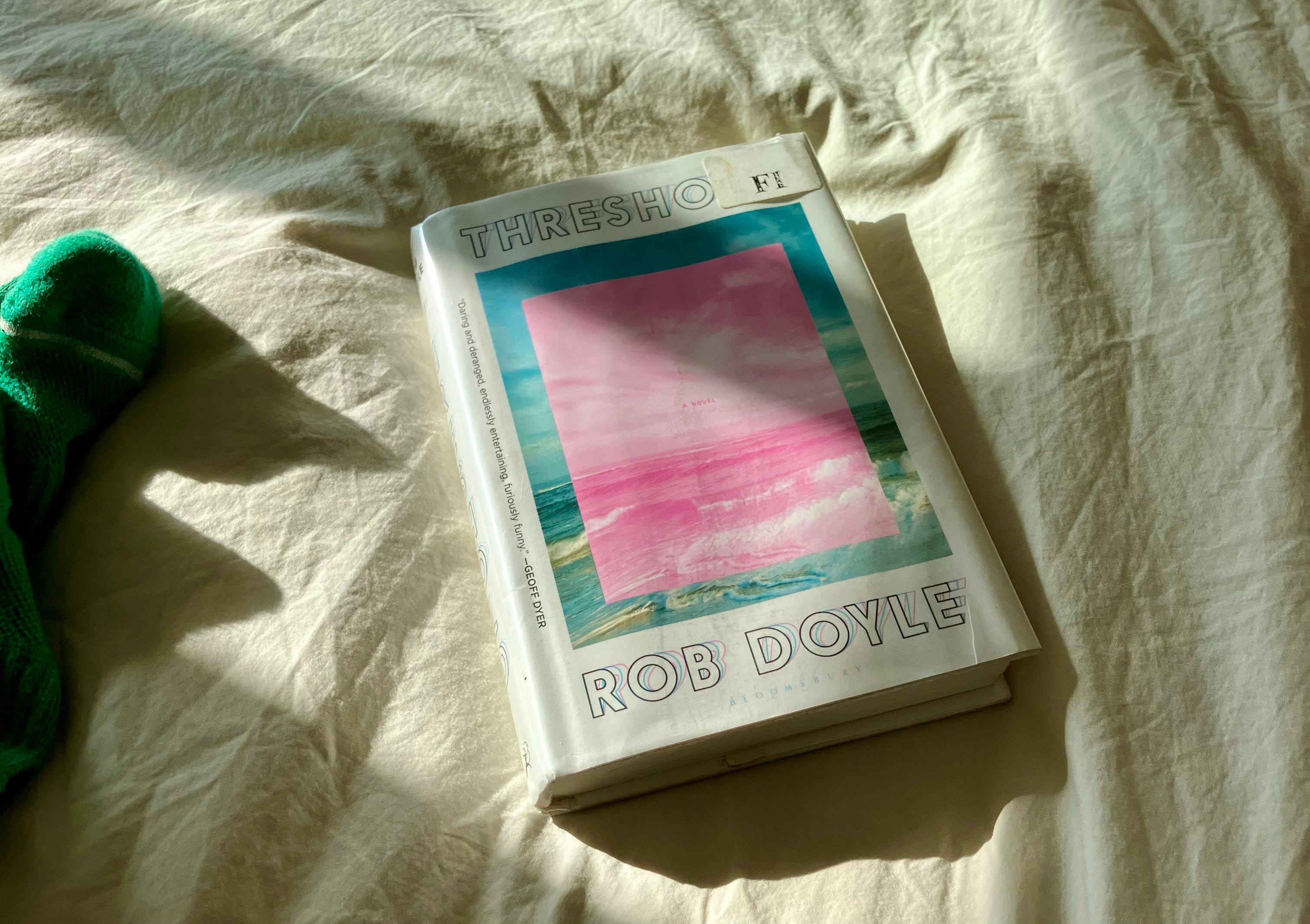
I picked up a library copy of Rob Doyle’s Threshold mostly out of curiosity. I’d recently come across a Substack post that referenced the book with a quote that dazzled me. It was a quote that seemed to say in two sentences something I’d been trying (and failing) to say in a 4000-word essay, only better and with more confidence. And then, when I looked up the book, I saw that it had come out in March of 2020. Whaaa? March of 2020? How had this author done it? How had he arrived at this conclusion that had taken me what feels like forever to only sort of reach?
It was unsettling, semi-demoralizing.
But when I began to actually read the book, I started to see why. Oh, I thought. He’s just a forever-bachelor who has had the luxury of being a nihilist. He hasn’t had to tether himself to a specific place on planet Earth and while there, do the fascinating / priority-deranging work of being a mother and a writer. He simply alienated himself from most people from the very beginning.
But something—maybe even the simple desire to find the quotation in situ—pulled me back to the text. I kept reading, and at some point before page one hundred (and before finding the sought-after quote), I was won over.
Threshold is called a novel but doesn’t feel like one. No, it feels like a collection of observations, like a loose memoir or a piece of creative nonfiction—a term that, funny enough, our main character suggests as a “safe word” between him and one of his lovers (after accidentally breaking her finger in a previous sesh, whoops).
The protagonist, also named Rob, is an Irish writer with enough literary success to be able to travel around Europe, do an audacious amount of illegal drugs (never worry about them being spiked with fentanyl, apparently), drink to alarming excess, and not have a “real” job—even as the book makes clear in a very meta way that he isn’t quite as wanton as his actions make him seem. He is, on one level, wasting his life but not really, not actually because he is also writing about everything he is doing. To which I internally shouted: Same!
Which is a funny thing to internally shout to a narrator with whom one shares hardly anything else in common. But there it is, the virtue and paradox of art.
At times while reading Threshold, my eyes widened in response to not just the experiences relayed, including a near overdose, but more often by the fact that Doyle had the guts to relay them. The narrator comes across as so similar to the author, that surely Doyle understood that the reader would conflate the two. Indeed, this conflation feels like part of the story, as it does with all autofiction.
Each section of the book is prefaced by these italicized passages that feel like letters from the “real” Rob Doyle. But we don’t know to whom he is sending them, if anyone. Sometimes they feel like journal entries in which he is dialoguing with himself. In one of these passages, he writes:
If I am ‘either writing myself into a novel or writing myself out of one’,… a question arises: how much effort should I put into rendering myself as a ‘sympathetic character’? Am I one of those? To you, say?
If he is writing to himself, this question becomes very compelling. Is he sympathetic to himself? Or is he just another unlikeable narrator, the kind that leads someone in your book club able to seemingly dismiss the whole story by saying, “Eh. I didn’t like him.”
But by far my biggest reaction to the book was a feeling of jealousy. Doyle and/or his narrator got to behave so badly, so corrosively (to society!); the two of them—narrator and author— worked together in this pursuit. The narrator was selfish and possibly an addict. And the author followed him around so loyally, paying tribute to his depravity. To his ugliness. And what made me most jealous of all of course is that a publisher published the book! And noteworthy blurbers blurbed it! In other words: he got permission (and praise) for all this!
*
Meanwhile, I’m over here on Substack, stone-cold sober, writing 4000 words trying to defend the morality of writing thoughtfully about one’s children; trying to defend breaking with my friends’ politics about a homeless encampment across the street from my kids’ under-enrolled, Title 1, public elementary school; trying to get another book published that (in my opinion) wrestles with all of these things, but getting “No!” for an answer.
What to do about this besides have a giant tantrum? (Which I’ve already done, to be sure.)
Well, I guess I can either keep going on this uroboric journey—using uroboric to convey to you that I’m not stupid, even though to continue on this path would be stupid—or I can understand that maybe I need a new strat, as my ten-year-old would say.
Keep reading with a 7-day free trial
Subscribe to The Art of Losing to keep reading this post and get 7 days of free access to the full post archives.